Help Determine Which Restriction Enzyme Should Be Used to
Restriction enzymes Restriction enzymes are found in bacteria and other prokaryotes. RFLP is a method designed to detect genetic variation and involves the cutting of DNA with restriction endonucleases enzymes that cleave DNA at sites specifically related to nucleotide sequences.

Restriction Enzyme An Overview Sciencedirect Topics
3 Determine how many ul of enzyme to use using the enzyme concentration.

. If two DNA molecules have the. DNA genomic is used for PCR amplicon. GGTAÄTTCATCC GGTCÄÄTTCTÄGCGTÄ CCÄGTTAAGÄTCGCÄT ATGG.
1 Determine the amount total ug and total ul of DNA to be digested. Label colored tubes as follows. Electrophoresis of restriction enzymes can allow researchers to determine which enzyme was usedB.
It now is a complete DNA sequence analysis and editing program which contains powerful and unique features and is above all user friendly. 3 Determine how many ul of enzyme to use using the enzyme concentration. In order for a phage to replicate itself it inserts its DNA into the bacterial cell where it infects a bacterium.
A restriction endonuclease that recognizes the sequence CTNA_G. A diagnostic restriction enzyme digest takes advantage of the fact that restriction enzymes cleave DNA at specific sequences called restrictions sites. Knowing that the p53 gene needs to be placed into the plasmid identify which restriction enzymes you.
2 Use the ug amount of DNA to determine how many enzyme units to use. This technique can be applied to DNA from two individuals from the same species. 2 Use the ug amount of DNA to determine how many enzyme units to use.
The enzyme volume must be 10 or less. 4 Choose a total volume for the reaction. DNA genomic is digested by restriction enzyme then an oligo-targeter is added for detection.
Use your scissors restriction enzymes to cut your DNA samples only where you see the following base pattem. Restriction enzymes can also be used to generate compatible ends on PCR products. There are more than 400 known restriction enzymes in microscopic organisms like bacteria that distinguish and cut more than 100 diverse DNA sequences.
Make novel DNA constructs add fluorophores add other probes. Often the size of the plasmid insert and vector backbone are known and thus this technique can be quickly used to. One of the most important and most widely used restriction enzymes is EcoRI.
The questions below will help determine which restriction enzyme should be used to make a plasmid that contains both an intact vgp gene and a functional ampR gene. Turn your DNA samples over so the side with the bases is facing you. 1 Determine the amount total ug and total ul of DNA to be digested.
What results could be achieved from that. CCGG GGCC Cut between the G and the C as shown in the example. Genomic DNA regardless of the source is typically digested with restriction enzymes that recognize.
4 Choose a total volume for the reaction. The questions below will help determine which restriction enzyme should be used to make a plasmid that contains both an intact vgp gene and a functional ampR gene. Although the DNA sequence differences will be small restriction enzymes can be used to identify these differences.
They do not need sticky ends because the do not plan to combine it with other DNA. Open the Digests button navigate to New Digest and specify NEB and Double Cutters in the settings. Set up the reaction using the following scheme.
They recognize and bind to. The following DNA sequence is from a virus that is dangerous scientists want to use a restriction enzyme to cut the virus into bits. Create a restriction enzyme that will remove the gene of interst.
The questions below will help determine which restriction enzyme should be used to make a plasmid that contains both an intact vgp gene and a functional ampR gene. It important to keep the restriction enzymes on ice during the preparation of restriction digests as enzymatic activity decreases at higher temperatures. Answer questions 14 by selecting from the answer choices on the left.
Each group should have one tube labeled ENZ that contains the rehydrated restriction enzymes EcoRI and PstI. Biology QA Library What detection method could be used to determine a different restriction enzyme that is used in splicing the gene of interest was then used for splicing the vector to be used in producing a recombinant molecule which will produce an enzyme X. Which enzyme s would cut the human DNA shown in Part A.
Up to 24 cash back I. Enzyme X is a program for molecular biologists developed to help you determine which restriction enzymes you should use to cut your DNA of interest. In all cases one or more restriction enzymes are used to digest the DNA resulting in either non-directional or directional insertion into the compatible plasmid.
Answer questions 1-4 by selecting from the answer choices on the left. Search by the number of cuts 1 find and left-click on AseI to select this enzyme and hit Run Digest. Drag the correct answer to the right of each question.
Bacteria use restriction enzymes to fight off bacterial viruses called bacteriophages. A particular DNA sequence will always be cut in the same locations with the same enzymeD. If the sequence difference falls in a restriction enzyme recognition site it gives a restriction fragment length polymorphism RFLP Fig.
1 BamHI HaeIII and HindIII. Label these sites with the name of the restriction enzyme and draw a line indicating where the enzyme will cut. Digesting DNA into pieces that can be efficiently and reliably replicated through PCR Polymerase Chain Reaction Cutting DNA for analysis using Microarrays or High -throughput Sequencers.
Drag the correct answer to the right of each question. Open and switch the view to Linear Map. Complete DNA sequences can easily be determined using restriction enzymesC.
How do you set up a restriction enzyme digest. Answer questions 1-4 by selecting from the answer choices on the left. Give it a name too.
Restriction enzymes can be used to characterize DNA molecules becauseA. Unit Definition One unit is defined as the amount of enzyme required to digest 1 µg of λ DNA in 1 hour at 37C in a total reaction volume of 50 µl. Compare the restriction sites you found on both the chromosome and the plasmid.
16 sites on the plasmid DNA using the restriction enzyme handout as a guide. Restriction enzymes and DNA ligase are often used to insert genes and other pieces of DNA into plasmids during DNA cloning. By cutting the phage DNA into many pieces the restriction enzyme prevents replication.
EcoRI refers to Escherichia coli s first restriction enzyme Strain RY13. Green CS crime scene DNA Blue S1 Suspect 1.
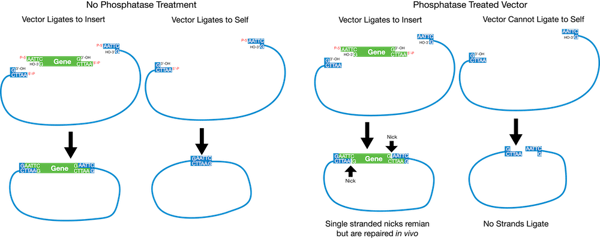
Plasmids 101 Restriction Cloning

Restriction Enzymes Youtube
Restriction Enzymes

Comments
Post a Comment